Power Bank Capacity Claims, Decoded: What mAh Actually Buys You
The number printed on a portable charger measures energy inside the cells, not energy that reaches your phone. Here is the arithmetic the spec sheet hides.
· 9 min read · 2,368 words
01
What mAh actually measures
A power bank advertised at 20,000 mAh is describing charge stored in its internal cells, not energy handed to your phone. The unit mAh means milliamp-hours, a count of electrical charge, and it carries no meaning until you pair it with a voltage. Lithium-ion cells sit at roughly 3.6 to 3.7 volts nominal, so the headline figure is measured at that low internal voltage. Multiply it out and 20,000 mAh becomes about 74 watt-hours of stored energy. Watt-hours, written Wh, are charge multiplied by voltage, which makes them the only capacity unit comparable across devices without further arithmetic.
Any honest capacity claim converts easily: divide mAh by 1,000, multiply by the cell voltage, and you have Wh. Regulatory labels almost always print the Wh figure on the casing or in the manual, because shipping rules require the marking. Listings that shout a huge mAh number while burying or omitting Wh are relying on your instinct that bigger is better. Treat a missing Wh rating as information about the seller. Two banks with identical mAh claims can also hold different energy if the chemistry differs: lithium iron phosphate cells sit near 3.2 volts nominal, so 20,000 mAh of them is about 64 Wh, not 74.
Look in the fine print for a second, smaller number. Many listings quote a rated capacity or output capacity beside the headline, typically somewhere around 12,000 to 13,500 mAh for a 20,000 mAh pack. That figure is the charge measurable at the 5-volt output port after conversion losses, and it is much closer to what you will actually experience. The two numbers do not contradict each other. They are measured at different points in the circuit, and only one of them describes what leaves the port. Sellers who publish both are telling you something useful about how they operate.
02
Where the missing thirty to forty percent goes
Stored energy and delivered energy are different quantities, and the gap is large. To send power out of a USB-C port, the bank must boost its cell voltage from 3.7 volts up to 5, 9, 15 or 20 volts. That conversion runs at roughly 85 to 93 percent efficiency in decent hardware. The receiving device then converts back down to its own cell voltage and loses several percent more. Cable resistance takes a cut, protection circuitry takes a little, and heat carries away the rest. Sixty to seventy percent of rated capacity reaching the destination battery is a normal, honest result.
The efficiency curve is not intuitive. Pushing power at 9 or 15 volts is usually gentler on the total than pushing the same wattage at 5 volts, because higher voltage means lower current, and current is what generates heat in wires and switches. Very fast charging runs hot and gives some of that back. Very slow charging keeps the bank's control electronics awake for longer, which also costs energy. Mid-range output into a device that supports proper USB-C negotiation tends to land near the top of the range rather than the bottom.
Temperature moves the number as well. Lithium cells surrender usable capacity below about 5 degrees Celsius, and a bank left in a cold car overnight can behave as though a quarter of its charge evaporated until it warms back up. Heat works differently: it does not cost you capacity today, it costs you cycles. Banks also leak while doing nothing at all. Self-discharge and standby current typically drain a few percent a month, so a pack charged in March is not full in June, and the indicator lights will not warn you before you leave the house.
Always the number to compare, and the only one aviation authorities recognise. It still describes stored energy rather than delivered energy, so apply a 60 to 70 percent factor before believing any charge-count claim.
03
Do the arithmetic before deciding how big to buy
Work an example. A 20,000 mAh bank holds about 74 Wh. Apply a 65 percent real-world factor and roughly 48 Wh reaches your devices. A phone with a 5,000 mAh battery holds about 19 Wh, so you get two and a half full charges, not the four the box implies. A thin laptop with a 60 Wh battery gets slightly under one charge, and that assumes the laptop is asleep rather than doing work. Tablets sit between the two and drink more than people expect, because their screens are large and bright.
Run the calculation in reverse when shopping. Add up the watt-hours of everything you genuinely plan to refill in a day away from an outlet, divide by 0.65, and buy the smallest bank that clears the result. Capacity you never use is weight you carry every day for a scenario that happens twice a year. Around 10,000 mAh covers a phone and earbuds comfortably. Laptop users should think at 20,000 mAh or above, and accept that a full laptop recharge from a pocketable brick is not realistic without a noticeable jump in size.
Weight is the constraint most people leave out. Finished consumer packs land somewhere around 130 to 180 watt-hours per kilogram once the casing, board, ports and padding are counted, so 74 Wh means roughly 400 to 570 grams riding in your bag every day. Doubling capacity doubles that. This is the practical argument for two 10,000 mAh banks over one 20,000: you carry a single unit on ordinary days, both when the day warrants it, and a dead or failed cell in one still leaves you with a working charger.
04
USB-C Power Delivery and PPS set the speed, not the capacity
Capacity determines how long a bank lasts. Protocol determines how fast it fills anything. USB-C Power Delivery, shortened to PD, is a negotiation standard in which device and bank agree on a voltage and current before power flows. What matters on a spec sheet is not the headline wattage but the per-port distribution. A bank labelled 65 watts frequently means 65 watts total across all ports, dropping to 45 and 18 once a second device is plugged in. Some designs cut the main port hard the moment anything else connects. That detail lives in the fine print.
PPS stands for Programmable Power Supply, an extension of PD that lets the bank adjust voltage in 20-millivolt steps rather than jumping between fixed levels. A compatible phone's battery management circuit can then take power almost directly, skipping an internal conversion stage. The result is less heat and a real efficiency gain. PPS earns its keep on phones designed around it and does nothing whatsoever for a laptop or a camera, which request fixed PD profiles instead. Check the stated PPS voltage range rather than the logo, because a narrow one may not cover what your handset asks for.
Read that range as a specification, not a badge. A PPS profile is published as something like 3.3 to 11 volts at 5 amps, and a phone that wants 10 volts will get nothing special from a bank whose PPS tops out at 5.9 volts. Above the standard fixed profiles, USB PD 3.1 adds extended-range voltages of 28, 36 and 48 volts to reach 140 to 240 watts. That is workstation-laptop territory, and it demands matching silicon at both ends plus a cable explicitly rated for extended range, which most bundled cables are not.
05
GaN is real, and the cable is what limits you
GaN means gallium nitride, a semiconductor used in a charger's switching stage instead of silicon. It switches faster and tolerates more heat, which lets designers shrink the transformers and capacitors around it. The practical outcome is a wall charger that is noticeably smaller and cooler for the same output. That is a genuine improvement and worth a modest premium if you carry the thing. What GaN does not do is charge anything faster. A 45-watt GaN charger and a 45-watt silicon charger deliver identical power to the same phone.
The cable is the component people skip and then blame the charger for. USB-C cables carry 3 amps by default, which caps them near 60 watts no matter what either end can do. Anything above that requires an e-marked cable, meaning it contains a small chip declaring a 5-amp rating. A charger and bank both capable of 100 watts, joined by an unmarked cable, will quietly settle at 60 and give no error. Cables also degrade with bending at the strain relief, and a damaged one renegotiates downward without announcing it.
The brick that refills the bank deserves as much attention as the bank itself. A 74 Wh pack fed from an old 5-watt phone charger takes the better part of a day; the same pack on a 45-watt input finishes in roughly two hours. Input wattage is often listed in smaller type than output wattage, and sometimes not at all. Cable length is the other quiet variable, because resistance rises with length and a three-metre cable at 5 volts can drop enough voltage to slow things measurably. Keep short cables for charging and long ones for reaching the sofa.
06
The 100 Wh airline limit, and why it is written in Wh
Aviation rules for lithium batteries are written in watt-hours because watt-hours describe energy, and energy is what burns. The common threshold is 100 Wh. Below that, a spare battery travels in carry-on baggage with no special permission. Between 100 and 160 Wh you need airline approval and are usually limited to two units. Above 160 Wh it does not fly. Spare batteries and power banks belong in the cabin, never in checked luggage, and a growing number of carriers require them to stay within reach rather than in an overhead bin, and forbid charging from them in flight.
Translate before you pack. One hundred watt-hours is roughly 27,000 mAh at 3.7 volts, which is why so many travel banks cluster just under that figure. Anything advertised above about 26,800 mAh deserves a look at the printed Wh rating. Two traps recur. Some listings quote an enormous mAh number beside a Wh figure that is arithmetically impossible, which means the capacity claim is inflated. Others print no Wh figure at all, leaving you to argue with a gate agent who has no reason to take your word for the contents of a sealed plastic case.
Approval for the 100 to 160 Wh band is rarely something you can arrange at the gate. Carriers that permit those units generally want the request filed in advance, and the crew's only evidence at boarding is the rating moulded or printed on the case, which is why a worn-off or absent label tends to be treated as a refusal rather than a judgement call. The checked-baggage ban has a specific logic behind it: a cell entering thermal runaway in the hold is unreachable, while the same cell in the cabin is a fire someone can actually get to.
PD support is essentially mandatory now. PPS produces a real efficiency and heat benefit on phones built around it and none at all on a laptop or camera, which request fixed profiles. Check the published voltage range, since a 3.3 to 5.9 volt profile cannot serve a phone asking for 10.
07
Pass-through charging, and the features I would skip
Pass-through charging means the bank accepts power from a wall outlet while simultaneously feeding a device. It is genuinely useful in a hotel room with one reachable socket, or overnight when you want everything topped up by morning. The catch is that the cells charge and discharge at once, which generates heat and adds wear the cycle rating never accounts for. Implementations vary enormously, and many banks that technically support it will prioritise the output port and barely refill themselves. Look for explicit confirmation in the manual rather than assuming the feature exists because the ports allow it.
Several common extras earn less than they cost. Wireless charging pads built into banks lose roughly a third to a half of the energy as heat, a poor trade when your total budget is already fixed at 74 Wh. Integrated cables are convenient until the strain relief cracks, at which point the whole unit is scrap. Small solar panels are decorative, since the collecting area needed to meaningfully refill a pack this size is closer to a beach towel than a paperback. Four-LED indicators are voltage guesses and routinely show one bar for half the discharge.
Two features do repay the money. A numeric percentage paired with a live wattage readout tells you whether a device is negotiating the speed you paid for, which is the most useful diagnostic a bank can offer and the fastest way to catch a bad cable. The second is a low-current or trickle mode, usually triggered by double-pressing the power button. Without it, a bank reads the tiny draw of earbuds or a tracker as nothing connected and closes the port after ten or fifteen seconds, which is the single most common reason a working bank looks broken.
08
Sanity-checking a bank once it arrives
Put it on a kitchen scale before anything else. A pack claiming 74 Wh that weighs 180 grams is claiming an energy density no consumer cell delivers, and that one measurement catches most fabricated listings before you have plugged in a cable. Give it a shake as well. Cells in a competently built pack are bonded and packed against movement, so anything that rattles or shifts is loose padding around undersized cells, or occasionally ballast added purely to make the parcel feel substantial in the hand.
An inline USB power meter costs less than a decent cable and settles arguments permanently. Charge the bank fully, then discharge it into a device that will accept a steady draw and read the cumulative watt-hours delivered. Forty-five to fifty watt-hours out of a pack rated 74 Wh is a normal, honest result. Thirty means the cells inside are smaller than the label says. The same meter shows you the negotiated voltage, so you can see at a glance whether your phone pulled the 9-volt profile or quietly stayed at 5 because of the cable.
Watch the first few cycles rather than judging on day one. A bank that becomes uncomfortably hot, rather than merely warm, while supplying 30 watts has weak thermal design or a marginal converter, and sustained heat is what turns a three-year pack into a one-year pack. Note how far the charge falls after a fortnight sitting idle in a drawer. Losing more than roughly ten percent a month points at a parasitic drain or tired cells, and that is the difference between a bank that is ready when you grab it and one that is dead weight.
What to avoid
- Buying the largest bank available on principle. A brick near the 100 Wh airline limit weighs half a kilogram, which is enough that you will leave it at home on ordinary days, and ordinary days are when a flat phone catches you out. Two smaller banks usually serve better than one large one.
- Believing any charge-count claim on packaging. Take the bank's Wh, multiply by 0.65, divide by your device's Wh. The honest answer is normally a little over half what the box promises, and the seller knew that when the box was printed.
- Paying a premium for GaN and expecting faster charging. GaN buys a smaller, cooler wall charger at the same wattage, nothing more. If the charger never leaves one power strip, the extra cost delivers a benefit you will never be in a position to notice.
- Assuming the bundled cable supports the bank's peak output. Unmarked USB-C cables cap near 60 watts, so a 100-watt bank paired with a generic cable behaves like a 60-watt one, silently, and the bank takes the blame for a two-pound component.
- Paying for a built-in wireless pad or a small solar panel. Wireless transfer discards a third to a half of a fixed energy budget as heat, and a panel that size needs days of direct overhead sun to put back what one phone charge removed.
Common questions
- Why does my power bank never deliver the number of charges advertised?
- Because the advertised capacity is measured inside the cells at about 3.7 volts, and delivering power requires boosting that up to 5, 9 or 20 volts and then converting it back down inside your phone. Each conversion loses energy as heat, cables add resistance, and the bank's own electronics draw a small amount continuously. Sixty to seventy percent of rated capacity reaching your device is normal and does not indicate a defect. Check the listing for a rated or output capacity figure, which describes the same thing honestly.
- Can I take a power bank on a plane?
- Under 100 Wh, which is roughly 27,000 mAh at 3.7 volts, you can carry it on with no approval needed. Between 100 and 160 Wh you need airline permission arranged in advance and are usually limited to two units. Above 160 Wh it is prohibited outright. It must travel in the cabin, never in checked baggage, and a growing number of airlines now require it to stay within reach and forbid charging from it in flight. Confirm the Wh rating is legible on the case before you fly.
- Do I need PPS, or is plain USB-C PD enough?
- It depends entirely on your phone. Handsets designed around PPS charge faster and noticeably cooler with it, because their battery management circuit takes power almost directly instead of converting it again internally. Laptops and cameras ignore PPS and request fixed PD voltage steps, as do most tablets. If nothing you own asks for PPS, plain PD at adequate wattage is all you need. If something does, check the published voltage range rather than trusting the logo, since a narrow profile may not cover the request.
- Is it bad to leave a power bank plugged in all the time?
- It is not dangerous in a well-made unit with proper protection circuitry, but it is not ideal either. Lithium cells age fastest when held at full charge in a warm place, and a bank sitting on a desk beside a laptop is warmer than you think. If a bank goes unused for long stretches, store it around half to two-thirds full somewhere cool and top it up every few months. Letting it sit completely flat for a long period is the more damaging habit of the two.
- How do I tell whether a listed capacity is fake?
- Do the conversion yourself. Divide the mAh by 1,000, multiply by 3.7, and compare the result to the Wh figure printed on the product. If the two disagree, or if the claimed mAh would exceed 100 Wh while the seller insists the unit is airline-legal, the capacity number is fabricated. Weight is the second check, since finished packs run about 130 to 180 Wh per kilogram, so a genuine 74 Wh bank cannot weigh 180 grams no matter how the listing is worded.
- My power bank stopped charging my earbuds. Is it broken?
- Almost certainly not. Most banks monitor the current being drawn and shut the port down when it falls below roughly 50 to 100 milliamps, on the assumption that the device has finished or been unplugged. Earbuds, fitness trackers and some watches draw less than that threshold, so the port closes after ten or fifteen seconds. Banks that handle this advertise a low-current, trickle or accessory mode, normally activated by double-pressing the power button. If yours has no such mode, small accessories will never charge from it reliably.
Mobile & Power, decoded
Struck = safe to ignore= what it really tells you
- mAh (milliamp-hours)
A count of electrical charge stored in the internal cells, measured at the cells' own voltage of roughly 3.7 volts.
Useful only for comparing two banks of the same battery chemistry. It is close to meaningless for predicting how many times your phone will refill, and it is the number marketing leans on precisely because it sounds larger than reality.
- Wh (watt-hours)
Charge multiplied by voltage, so it describes actual energy. Divide mAh by 1,000 and multiply by 3.7 to get it.
Always the number to compare, and the only one aviation authorities recognise. It still describes stored energy rather than delivered energy, so apply a 60 to 70 percent factor before believing any charge-count claim.
- Rated capacity (output capacity)
The charge a bank can actually push out of its port, measured at 5 volts after conversion losses, usually printed in smaller type than the headline number.
This is the honest figure, and it typically lands around 60 to 68 percent of the advertised mAh. A seller who publishes it is describing the product; a seller who omits it is describing the cells and hoping you conflate the two.
- USB-C PD and PPS
PD is the protocol that lets a bank and a device negotiate voltage. PPS is a PD extension allowing 20-millivolt steps instead of fixed jumps between 5, 9, 15 and 20 volts.
PD support is essentially mandatory now. PPS produces a real efficiency and heat benefit on phones built around it and none at all on a laptop or camera, which request fixed profiles. Check the published voltage range, since a 3.3 to 5.9 volt profile cannot serve a phone asking for 10.
- GaN (gallium nitride)
A semiconductor material in the charger's switching circuit that runs cooler and faster than silicon, allowing smaller components around it.
Matters when size and heat matter, such as a travel charger you pack every trip. It has no effect on charging speed. A GaN label on something that lives permanently behind a desk buys you nothing you will ever notice.
- E-marked cable
A USB-C cable containing a chip that declares it can safely carry 5 amps, which is required for anything above roughly 60 watts.
Critical the moment you want more than 60 watts, such as charging a laptop, and separately required in an extended-range version for the 140 to 240 watt PD 3.1 profiles. Irrelevant for phones and earbuds, where a plain 3-amp cable already exceeds what the device will draw.
The shelf
Discounted in Mobile & Power
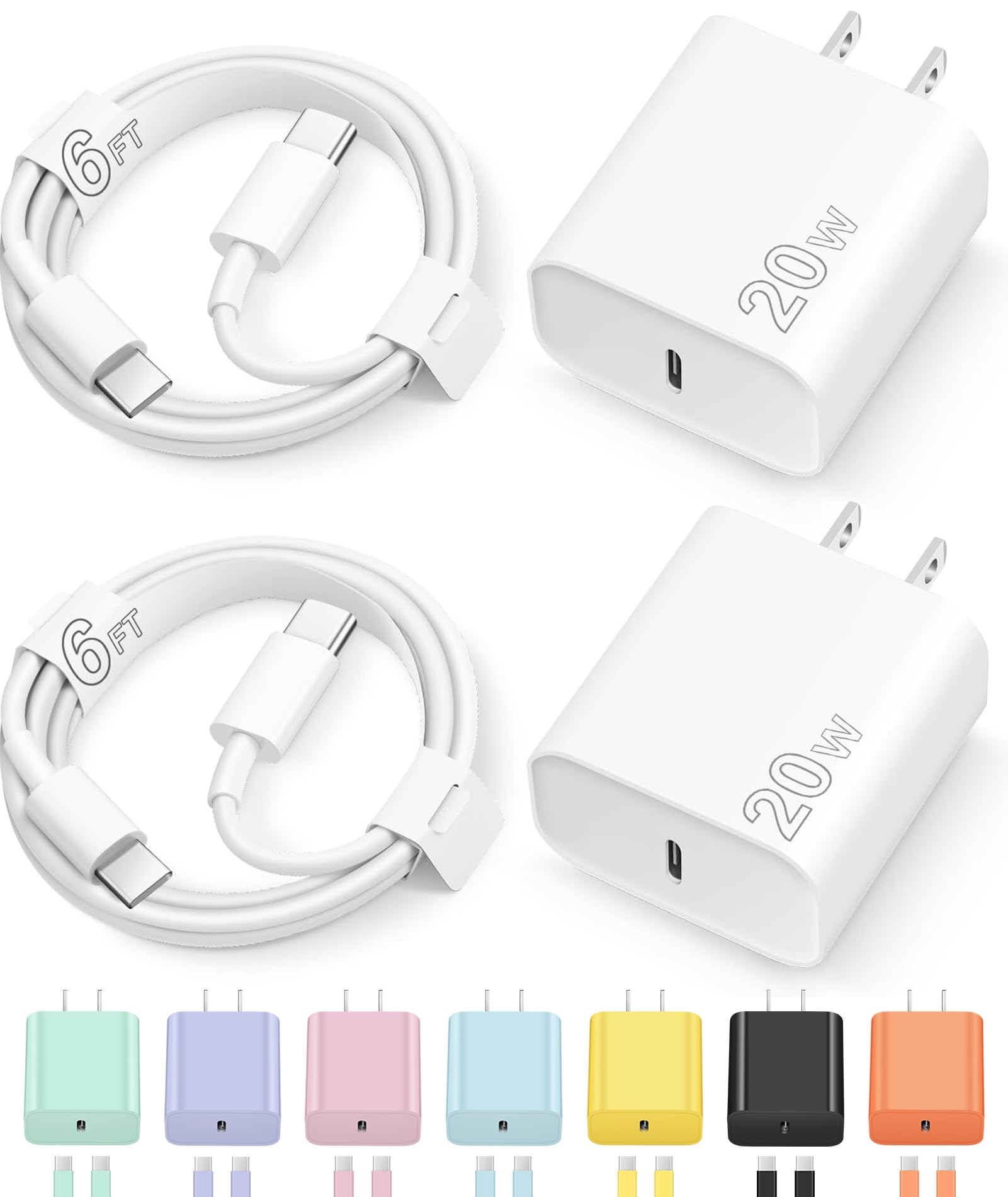
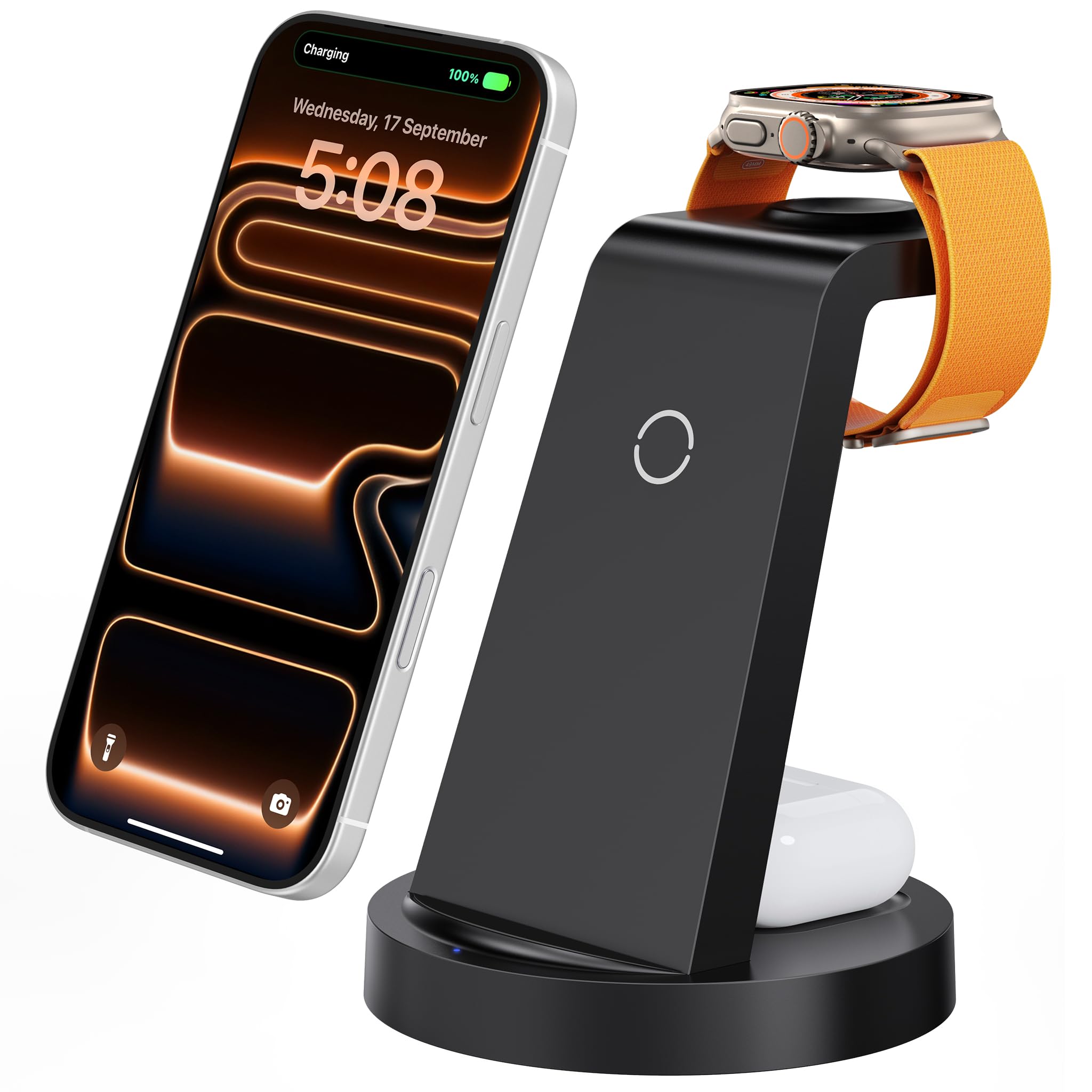
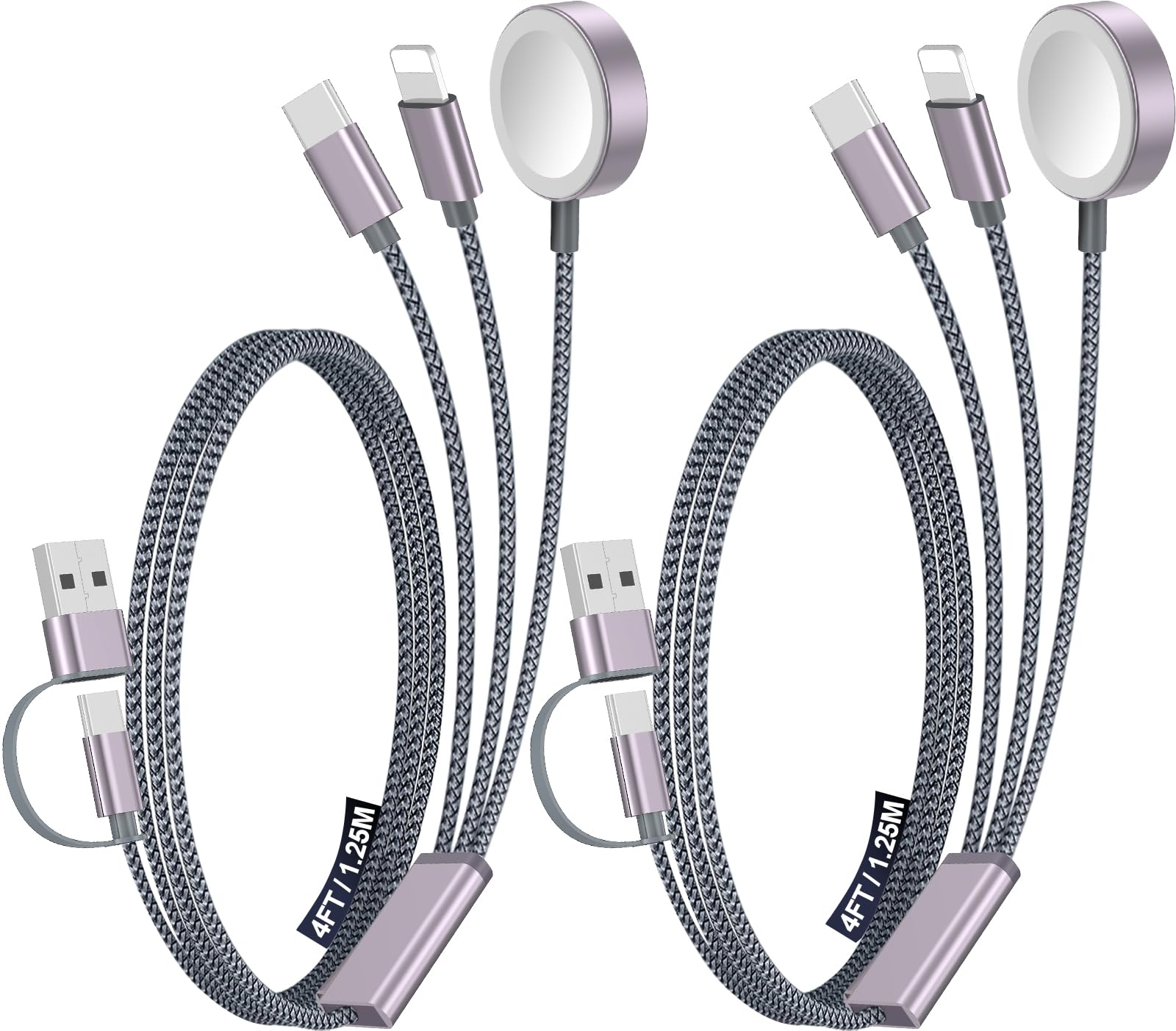
Products in this category our engine currently flags as below their usual list price. Apply the guide above before you buy any of them.